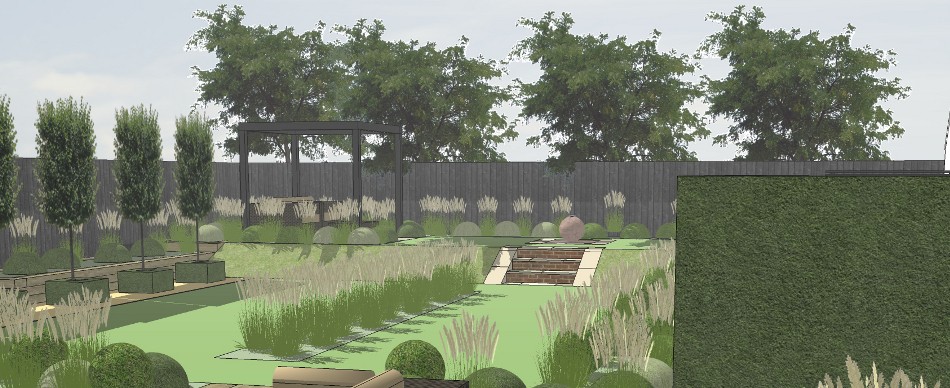
Everyone should make room for wildlife in their garden whether it is a feeding station for birds, a small pool of water for a frog and for birds to drink from or upturned ceramic pots buried in the border for bees. A wildlife garden does not have to be a messy, unruly tangle of weeds with a patch of stinging nettles at the bottom of the garden - far from it.Wildlife would like to be invited into any style of garden which we can design, even very contemporary gardens. To attract wildlife you will need water, by providing a small shallow pool this could be a simple plastic dustbin lid, it just needs to be easily accessible and have shallow sides or an old branch placed across the water (this allows say a hedgehog to clamber out on if they fall into the water). Once you have attracted wildlife they will need some source of food either pollen rich planting for bees and butterflies or nuts and berries for birds and mammals. When the wildlife has arrived and taken a liking to the garden, it will need somewhere to stay, obviously trees, hedges and shrubs are ideal but not everyone has the space, so one idea would be to build a small Hiburnaculum these take various forms one of which can be a neatly arranged stack of tiles, pipes, bricks and cut canes etc; another way would be to build a small dry stone wall. We have designed 'Wildlife Gardens' in Cambridgeshire, Bedfordshire and Northamptonshire and for a number of show gardens over the years. We designed a lovely wildlife-friendly garden on behalf of the Wildlife Trust at Chelsea Flower Show - so we can advise you on ecological and sustainable garden designs to support wildlife and biodiversity.